

The Lean Startup
Executive Summary
- Reimbursement MVP (Minimum Viable Product): It isn't a prototype; it’s a "Pseudo Dossier" used to validate payer interest in advance.
- Pivot Early: Validating clinical claims during the design phase saves millions in "waste" development.
- The Goal: Obtain Payers' feedback prior to actually generating clinical evidence to enable an early pivot.
Background
A lot has been written about how Lean Startup methodology might help entrepreneurs build commercially successful products. In this article we provide a real-life example from one of our clients, which failed to develop a commercially successful product, and show how implementing Lean Startup methodology may decrease the likelihood of such failures.
To get a broad understanding of Lean Startup, interested readers may access the Lean Startup website of Eric Ries, one of the originators of the Lean Startup methodology.
1. The Problem
2. A Real Life Example
One of our clients developed an innovative product, which consisted of an array of electronic stethoscopes that passively monitor vibration energy from the lungs. The product enabled clinicians to monitor sites of airway obstruction without exposing the patient to radiation or invasive procedures. The company conducted a clinical study that demonstrated the accuracy of its system and received the FDA's clearance with the intended use of "monitoring lung sounds". At this point they approached us to help them develop their reimbursement strategy and implement it in the US.
After doing some homework we interviewed a couple of US payer representatives who immediately told us: "It is going to be a cold day in hell before we pay for this technology!" Had the product helped clinicians differentiate between Asthma and Chronic Obstructive Pulmonary Disease (COPD), they would consider it, but since they don't see what different clinical decisions could be made by "monitoring lung sounds", they won't pay for it. Such a product is an example of 'waste'.
Expert Insight: We often see startups celebrate FDA clearance as the "finish line." In the Lean MedTech model, FDA clearance is merely the "permission to start the race." The real finish line is a positive coverage policy from a major payer.
| Signal | Payer Sentiment | Strategic Pivot | Core Lesson |
|---|---|---|---|
| Outcome Mismatch | "We don't pay for 'monitoring', only for 'diagnosis'." | Change clinical endpoints to to a diagnostic claim. | Clinical Validity Actionable Data |
| Stakeholder Shift | "The device actually saves the hospital money." | Rewrite Value Story to focus on hospital cost-savings. | Focus on the right decision maker |
3. Implementing Lean Startup Methodology
Lean Startup offers a few basic tools to prevent such a miscarriage, one of which suggests building a product incrementally and iteratively. Accordingly, instead of developing, testing, obtaining FDA clearance and only then obtaining payers' feedback, the company above should have sought payers' feedback a lot earlier.
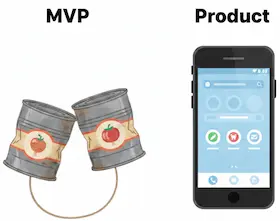
But how could anyone obtain a payer's feedback before the product is complete? This is where Lean Startup introduces the concept of a Minimum Viable Product (MVP). A MVP is the version of a new product, which allows to collect of stakeholders' feedback with the least effort and as quickly as possible.
We call the MVP that we develop for our clients a 'Pseudo Dossier'. This 'Pseudo Dossier' includes most of the documentation the company expects to obtain in the future, once the product is fully developed and cleared/approved for marketing. However, it is based on the company's estimations, not actual data. The included pseudo data may indicate estimated clinical trial results, product price, etc.
4. Developing a 'Pseudo Dossier'
When we develop a 'Pseudo Dossier', we typically take the following steps:
The above Value Story, economic model and existing/planned clinical data (including the estimated results) are presented to relevant physicians and payers, seeking their feedback as if the product is complete and the estimated clinical study results represent the actual results that may be obtained within a year or two.
The completion of such a 'Pseudo Dossier' can be achieved within a couple of months, early enough to impact the product's specification, planned applications and clinical studies. In case of negative feedback the company should consider changing the Value Story, economic model, clinical data or the product's features and then seek payers' feedback again until receiving positive feedback. Only upon receipt of positive feedback, it would make sense to continue with the development work and clinical studies. Otherwise, it is just an expensive gamble which may lead to the company's failure.
Summary
Is your Clinical Study designed for Payers?
Don't spend millions on "Waste." Let us help you build a Pseudo Dossier and validate your Value Story with actual US payers before you enroll your first patient.
Frequently Asked Questions: Lean Reimbursement Strategy
What is a "Pseudo Dossier" for medical devices?
A Pseudo Dossier is an early-stage version of your reimbursement application. Instead of waiting for final clinical data, you use estimated results to create a value story. This acts as a Minimum Viable Product (MVP) that you can show to payers to see if your intended claims actually trigger a willingness to pay.
How does the Lean Startup "Pivot" apply to MedTech?
A pivot occurs when early payer feedback reveals that your current product path won't be reimbursed. For example, if payers won't pay for "monitoring" but would pay for "diagnosis," the company pivots its clinical trial focus to diagnostic accuracy. Doing this early prevents the "waste" of a failed launch.
Why is payer feedback more important than FDA clearance alone?
Regulatory clearance (FDA or CE Mark) only proves a device is safe and effective. It does not prove that anyone will buy it. In the MedTech world, the "Customer" is often the Payer, and failing to validate their requirements leads to building products that are engineering marvels but commercial failures.
Can I get payer feedback without a finished product?
Yes. By using Lean methodology and presenting a Pseudo Dossier, you can interview medical directors at insurance companies. They can provide non-binding feedback on whether your proposed economic model and clinical endpoints would justify coverage once the data is real.
Need Concrete Market Access Support?
Securing coverage and coding is the most critical step of your commercialization timeline. Our team maps global reimbursement pathways directly to your business goals.
About the Author