

Executing Coding, Coverage & Payment Strategies
Turning Market Access Strategy into Commercial Revenue
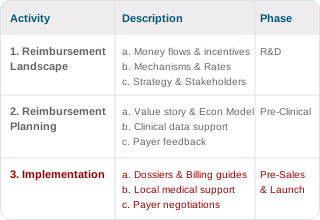
Implementation is where clinical evidence meets the reality of the healthcare provider's billing office. Depending on whether your technology fits existing mechanisms or requires new pathways, we execute the tactical steps to ensure payment.
Success in this phase is measured by the ease with which a provider can order, use, and get paid for your product without administrative friction.
Implementation Deliverables
Pathway A: Utilizing Existing Reimbursement
When applicable mechanisms already exist (as identified in Phase 1), we focus on removing barriers to adoption:
- a. Physician Billing Guides: Step-by-step instructions for coders and clinicians on how to properly document and bill for your technology using current codes.
- b. Value Dossier: A comprehensive evidence package (Value Story + Economic Model) designed to convince hospital committees and value-analysis teams to approve the purchase.
Pathway B: Establishing New Reimbursement
If no coding or coverage exists, we manage the long-term effort to build a permanent payment infrastructure:
- a. User Base Development: Strategy to establish a documented footprint of patients and centers to demonstrate "widespread use"—a key requirement for new code applications.
- b. Medical Society Advocacy: Securing formal support from local medical societies and KOLs to provide clinical weight to payer applications.
- c. Case-by-Case Support: Developing collateral for "prior authorization" requests and training teams to manage denial appeals while national coverage is pending.
- d. Payer Pilots: Negotiating and facilitating pilot projects with individual private payers to generate real-world cost-effectiveness data.
Common Questions About Coding & Payment Execution
Q: What is a Billing Guide and why is it necessary?
A billing guide provides healthcare providers with the specific codes (CPT, ICD-10, HCPCS) and documentation requirements needed to submit claims correctly. It reduces administrative friction and ensures physicians get paid, which is critical for adoption.
Q: How long does it take to get a new reimbursement code?
The timeline varies by country. In the US, the CPT process typically takes 12-18 months. However, we often work on securing coverage under existing codes or case-by-case payment while new codes are being established.
Q: Do you help with denial appeals?
Yes. Part of implementation is training your team and providers on how to handle insurance denials and providing the clinical evidence summaries needed for successful appeals.